

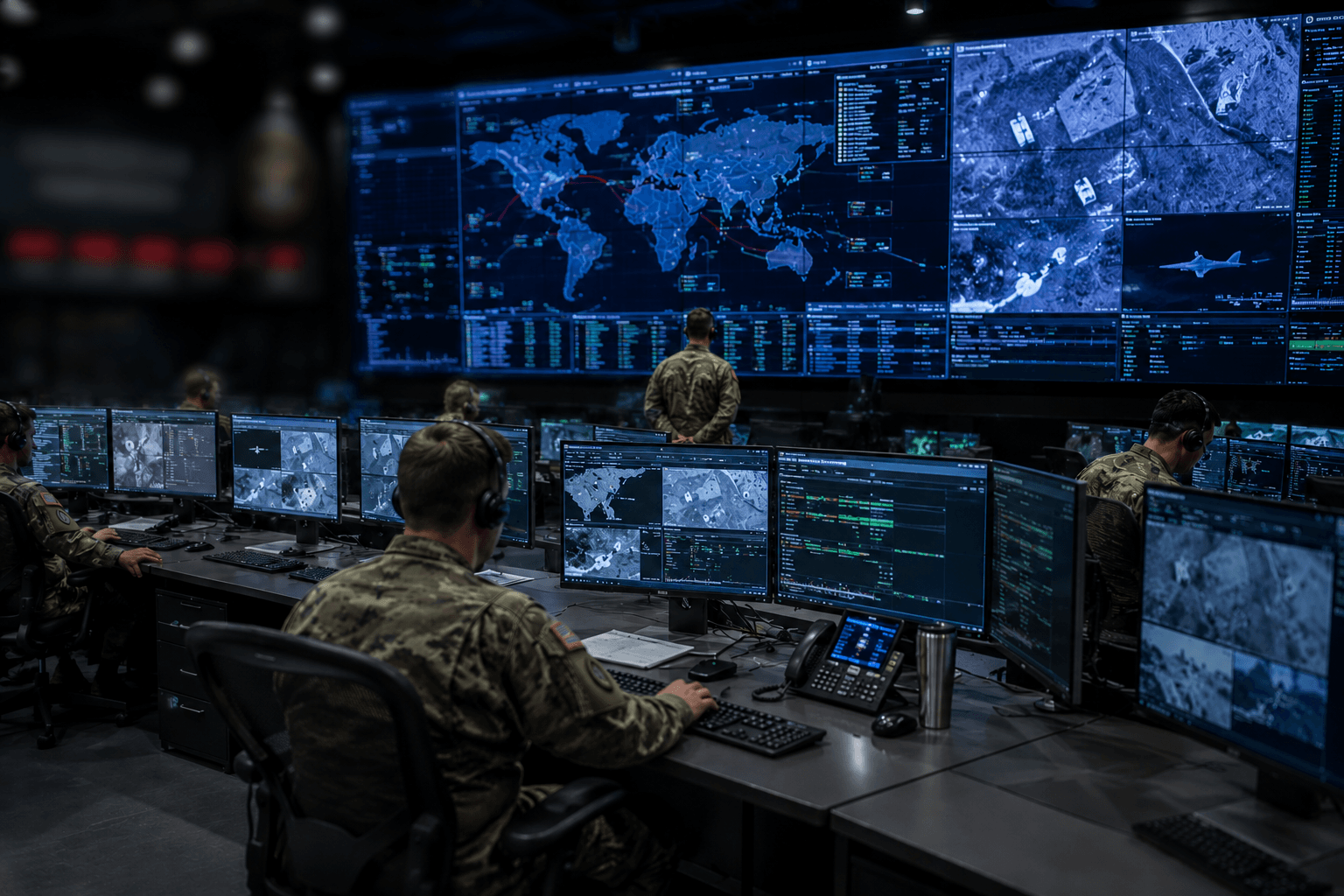
Defense infrastructure operates under conditions that traditional enterprise platforms were never designed to support. Connectivity may be degraded or unavailable. Infrastructure may be distributed across remote and mobile environments. Operational continuity matters more than centralized convenience.
Systems must remain secure, controllable, and operational even when networks, infrastructure conditions, or external dependencies become unpredictable.
Starlight was built with these realities in mind.
Built for operational continuity in contested environments
Defense operations cannot depend entirely on centralized cloud connectivity or permanently available control planes. Infrastructure must continue functioning during degraded network conditions, regional outages, disconnected operations, and infrastructure disruptions.
Starlight supports distributed operational architectures where workloads, services, and local infrastructure continue operating independently while synchronizing policy and operational state when connectivity becomes available again.
This allows organizations to maintain operational capability across remote facilities, tactical deployments, regional infrastructure, and sovereign environments without introducing fragile centralized dependencies.
Security integrated at the infrastructure layer
Defense organizations operate in environments where infrastructure itself becomes part of the attack surface. Platforms must be designed to reduce operational exposure while maintaining stability, visibility, and control.
Starlight incorporates infrastructure-level security capabilities including Secure Boot, workload isolation, encrypted overlay networking, identity enforcement, attestation, runtime protection, confidential computing, hardware-rooted trust, and post-quantum cryptography support.
Security policies apply consistently across virtual machines, containers, AI workloads, storage, networking, and distributed edge infrastructure through a unified operational model.
Designed for secure and restricted environments
Defense infrastructure frequently operates under strict operational, regulatory, and security constraints. External dependencies, uncontrolled telemetry paths, and tightly coupled cloud architectures introduce operational and security risk.
Starlight runs on infrastructure you control while allowing workloads, telemetry, operational data, and AI inference to remain inside your own environment.
This supports sovereign deployment strategies, isolated operational environments, and infrastructure models where operational control and data locality are mandatory requirements.
Resilience against operational disruption and cyber threats
Modern defense infrastructure must remain operational while organizations respond to cyber incidents, infrastructure attacks, degraded conditions, and operational disruptions.
Operational resilience is not only about prevention. It is about limiting exposure, reducing dependency chains, maintaining workload isolation, and preserving continuity during adverse conditions.
Starlight supports resilient infrastructure architectures designed to reduce lateral movement risk, simplify operational recovery, and maintain critical services during infrastructure instability or security events.
Operational simplicity reduces long-term risk
Defense environments often accumulate fragmented infrastructure stacks over time: separate virtualization systems, orchestration platforms, networking overlays, storage layers, observability tooling, AI infrastructure, and disconnected management systems.
Operational fragmentation increases cost, complexity, training requirements, and security exposure.
Starlight consolidates virtualization, containers, networking, storage, observability, identity, policy, security, AI serving, and distributed operations into a unified operational platform designed for long-term maintainability and operational consistency.
Supports heterogeneous and long-lived infrastructure
Defense environments rarely operate on uniform hardware or short infrastructure refresh cycles. Operational systems often span multiple generations of infrastructure across fixed facilities, mobile systems, edge deployments, and regional environments.
Modernization efforts must support incremental adoption without requiring wholesale replacement of surrounding operational infrastructure.
Starlight supports flexible deployment architectures across compact edge systems, accelerator-equipped nodes, regional infrastructure, private data centers, and distributed operational environments using a consistent operational model.
Procurement through established government channels
Adoption should align with established government procurement processes and operational acquisition models.
Starlight is available through established government purchasing channels, including procurement through Carahsoft and integration into existing contract vehicles when required. Agencies, integrators, and operational partners can evaluate and procure the platform using acquisition paths already familiar to government organizations.
This simplifies evaluation, procurement, deployment, and long-term operational adoption.
Predictable operational economics
Operational infrastructure planning requires stable and understandable economics over long lifecycle horizons.
Starlight uses a straightforward per-node subscription model with platform capabilities included. No per-core licensing expansion. No fragmented feature tiers. No separate operational stack licensing for virtualization, edge infrastructure, or AI workloads.
Organizations can scale infrastructure capacity according to operational requirements instead of licensing complexity.
Starlight is software you install on infrastructure you control: sovereign environments, remote operational sites, tactical deployments, private data centers, regional infrastructure, and distributed edge environments.