

Most enterprise AI stacks introduce a second infrastructure problem.
New GPU clusters. New orchestration layers. New licensing. New operators. New hardware requirements. New procurement cycles. Teams end up managing disconnected platforms just to run inference close to their own data.
Starlight takes a different approach.
Run models, agents, vector workloads, and inference directly on the same infrastructure that already runs your virtual machines, containers, and edge applications. One platform. One security model. One operational plane. One per-node subscription.
Keep your data inside your environment
Prompts, documents, embeddings, and inference stay on infrastructure you control. No public API dependency. No external model provider sitting in the middle of sensitive workflows. AI runs where your data already lives.
For regulated, sovereign, or latency-sensitive environments, this changes what is operationally possible.
Use the hardware you already own
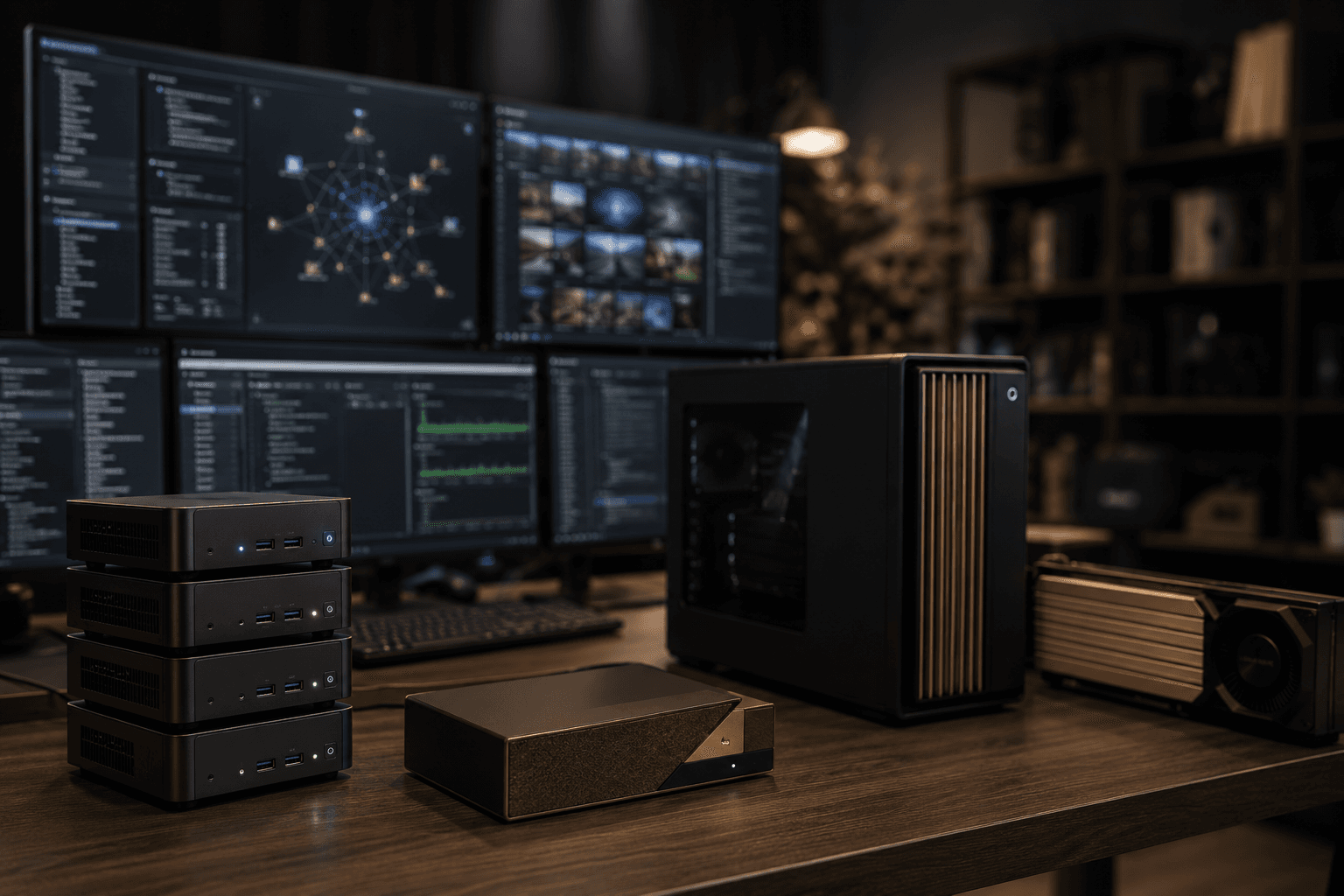
Starlight runs efficiently across mixed infrastructure: branch servers, rack-scale systems, GPU nodes, and edge deployments. You do not need a dedicated AI appliance stack just to deploy private inference.
Add accelerators where they make sense. Run quantized models when efficiency matters. Scale capacity incrementally instead of rebuilding infrastructure around oversized reference architectures.
Simpler than the enterprise AI stack maze
Traditional enterprise AI platforms layer Kubernetes distributions, GPU operators, service meshes, storage overlays, inference frameworks, and separate security tooling into a large operational surface area.
Starlight collapses that complexity into a single platform.
Virtualization, containers, AI serving, storage, networking, identity, observability, policy, and security operate together through one control plane instead of stitched-together infrastructure silos.
OpenAI-compatible APIs without lock-in
Existing AI applications can connect using standard chat completion, embeddings, and streaming interfaces. Your applications integrate once while your infrastructure remains portable.
Models are interchangeable. Hardware is interchangeable. Your stack stays under your control.
Built for environments cloud AI cannot reach
Starlight continues operating through degraded, intermittent, and disconnected conditions. Inference workloads keep serving locally even when connectivity is unavailable.
This enables private AI in remote facilities, tactical environments, industrial sites, sovereign infrastructure, and restricted networks where cloud-dependent platforms fail operationally.
Enterprise security built into the platform
Confidential computing, Secure Boot, hardware-rooted entropy, workload attestation, runtime isolation, and post-quantum cryptography apply consistently across VMs, containers, and AI workloads.
Security is part of the platform itself, not a separate AI security product category.
Scale capacity without token economics
Public AI pricing scales with usage volume. More prompts, more agents, and more automation increase external spend.
Starlight scales differently.
Add nodes to increase infrastructure capacity. Run workloads without per-token billing, per-request metering, or API usage overages. The economics align with infrastructure ownership instead of rented inference consumption.
Starlight is software you install on your own infrastructure: bare metal, edge sites, private data centers, sovereign environments, and cloud deployments.